What it is coneat?
Coneat
When analyzing a rural property in Uruguay, one of the first indicators to consider is the CONEAT Index. It is the official system used to classify the country’s soils according to their relative productive capacity and serves as a key reference for the purchase, sale, leasing, valuation, and assessment of rural properties.
The system was developed by the National Commission for the Agronomic Study of Land (CONEAT) and classifies the territory into relatively homogeneous soil groups according to their productive potential. Unlike a simple soil map, the CONEAT Index reflects the relative productivity of each group under natural conditions, using meat and wool production as its reference. Its legal basis is established in Law No. 13,695 of 1968, which originally introduced the system for taxation purposes.
| The CONEAT Index does not measure the market value of a rural property, but rather the relative productivity of its soils. Understanding this distinction is essential when properly assessing an agricultural investment in Uruguay. |
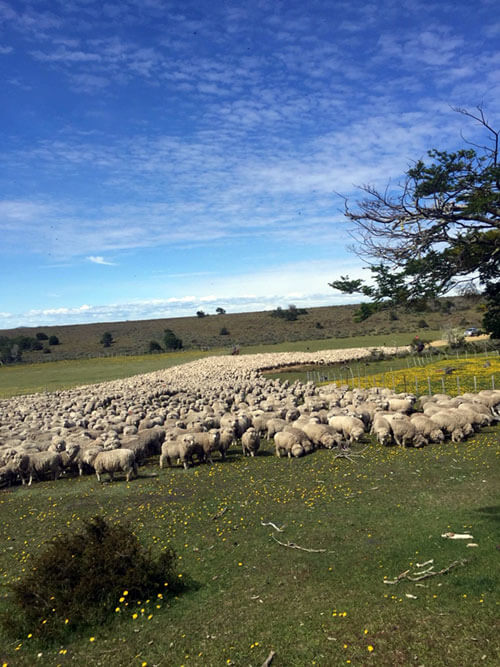
The scale is based on a reference index of 100, which represents the national average productivity. In general terms, soil groups with values above 100 have greater productive potential, while those with lower values indicate comparatively lower productive capacity. This provides an objective basis for comparing different rural properties and serves as a common reference within Uruguay’s rural land market.
However, the CONEAT Index does not, by itself, determine the economic or market value of a property, nor should it be interpreted as an absolute measure of land quality. Factors such as water availability, infrastructure, location, access to services, improvements, and the intended productive use of the land can be equally important when assessing an investment.
Likewise, the index does not necessarily reflect the potential of the land for every agricultural activity. Although it was originally designed around livestock productivity, many production systems achieve excellent results on soils with relatively low CONEAT values. This is the case with forestry, rice production, viticulture, and other specialized activities, whose suitability depends on specific soil characteristics rather than exclusively on the CONEAT Index.
For this reason, the CONEAT Index should be understood as a technical tool for comparison and guidance, rather than as a definitive indicator of the potential or value of a rural property. Its main strength lies in providing an objective and widely accepted criterion for assessing the relative productivity of soils, supporting informed decision-making and contributing to greater transparency in the rural land market.
Understanding the productive potential of the soil is one of the first steps when evaluating a rural investment. The next step is to understand the legal and tax framework governing the acquisition, operation, and transfer of rural land in Uruguay, which will be addressed in the following chapter.
Legal aspects
We provide information on the legal aspects in Uruguay
1248 Dr. Luis Alberto de Herrera Ave,
World Trade Center Tower III , Floor 12
11300 Montevideo, Uruguay
info@vieragro.com.uy