Forestry Uruguay
Forestry
Forestry represents one of the most significant productive transformations Uruguay has experienced in recent decades. Driven by Forestry Law No. 15,939 of 1987 and supported by a long-standing national policy, the sector has developed into a modern, competitive industry with a strong international focus. Today, forestry is one of the key drivers of Uruguay’s economic development and one of the sectors with the greatest potential for long-term investment.
The sector’s growth has been made possible by a combination of favorable natural resources, institutional stability, and long-term planning. Uruguay has a temperate climate, rainfall distributed throughout the year, and approximately four million hectares of forestry-priority soils, particularly suitable for commercial plantations. Of this area, more than 1.16 million hectares are currently planted, mainly with Eucalyptus and Pinus species, known for their rapid growth and high productivity. Eucalyptus plantations primarily supply the pulp and solid wood industries, while pine plantations are mainly used for sawmilling, panel production, and other higher value-added wood products.
| Since the approval of the Forestry Law in 1987, Uruguay’s planted forest area has increased sevenfold, consolidating one of the country’s most successful productive development policies. |
Forestry production operates on long-term cycles that include seedling production, forest establishment, silvicultural management practices—such as pruning and thinning—and, ultimately, harvesting. This planning helps ensure a continuous supply of raw materials for a highly integrated industry that transforms wood into a wide range of products while maximizing the efficient use of forest resources.
One of the key strengths of the Uruguayan model is precisely the development of this integrated value chain. In addition to pulp production, the sector includes sawmilling, panel manufacturing, structural timber, construction products, and energy generation from biomass. The use of forestry by-products for energy production reflects a comprehensive approach to wood utilization, reducing waste and strengthening the sustainability of the sector.
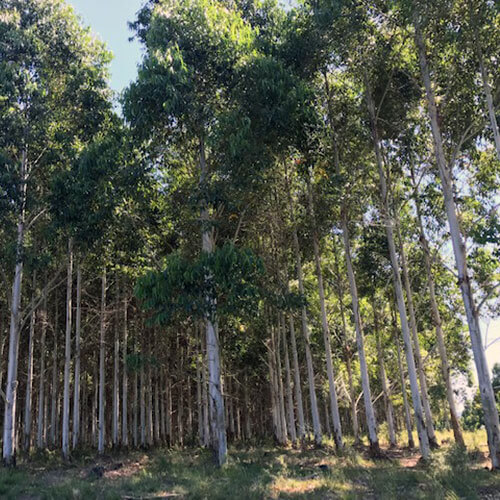

The growth of the sector has been accompanied by significant investment in industrial and logistics infrastructure, including modern pulp mills, sawmills, port terminals, and improvements to the country’s rail and road networks. These investments, together with Uruguay’s legal stability and increasing adoption of technology, have strengthened the sector’s international competitiveness. As a result, pulp has become one of Uruguay’s leading export products, while wood and wood-based products supply highly demanding markets across the Americas, Europe, and Asia.
Sustainability is another key pillar of Uruguay’s forestry sector. Forestry activities are primarily developed on land legally designated as forestry-priority soils, and nearly 90% of plantations hold international certifications, such as FSC and PEFC, which ensure responsible management standards from environmental, social, and economic perspectives. These certifications strengthen the sector’s position in international markets and respond to the increasingly demanding requirements of global markets.
Thanks to the combination of natural resources, technological innovation, modern infrastructure, sustainability, and a strong export orientation, Uruguay’s forestry sector has established itself as one of the country’s most competitive and dynamic industries. Its ability to generate high value-added products within a stable institutional framework makes forestry one of Uruguay’s leading opportunities for agro-industrial investment.
If forestry demonstrates how long-term planning can transform natural resources into a world-class industry, understanding the productive potential of rural land requires analyzing the resource upon which all agricultural activity depends: the soil. In the next chapter, we will explore the CONEAT Index, the classification system used to assess the productive potential and relative value of land in Uruguay.
What is the coneat?
We provide you with information about the Coneat
1248 Dr. Luis Alberto de Herrera Ave,
World Trade Center Tower III , Floor 12
11300 Montevideo, Uruguay
info@vieragro.com.uy